
Terms of Use — Pure Casino Australia Review Site | Disclaimer
Terms of use for our Pure Casino portal with plain-language guidance on limits, legal scope, and responsible reading of linked casino conditions.
Read the full Pure Casino review: go back to the main page before making deposit or withdrawal decisions.
📜 Terms are payout engineering. Read trigger clauses before betting, not after disputes start.
Terms and practical reading strategy
📜 Read terms as operational rules
Terms become critical the moment your balance turns positive. Max-bet clauses, wagering windows, and payment method constraints are common dispute triggers because they are easy to overlook in fast sessions. Reading terms before deposit is not legal theater; it is bankroll protection. Treat each clause as an action requirement, not background text. Players who do this early face fewer payout surprises and cleaner escalation outcomes.
🚨 Most expensive mistakes
The most expensive mistakes are usually mechanical, not malicious: one stake above max under bonus, one method switch mid-cycle, or one profile mismatch in document fields. Each mistake can trigger delays or invalidation paths that are difficult to reverse. These errors happen fastest when sessions are emotional or rushed. The fix is process discipline, not luck. Slow down before high-impact clicks.
How to reduce terms-related disputes
✅ Build your own compliance checklist
Create a one-page checklist with active offer, remaining rollover, max bet, excluded games, and document readiness. Keep it visible while playing and update it at every material change. This converts abstract rules into trackable behavior. A checklist is especially important when multiple offers are active across days. Structured tracking is the cheapest insurance you can buy.
🔗 Cross-reference before action
Before any deposit, review wagering rules and the bonus section on the main page. Use that context to verify whether your plan still matches current constraints. If terms changed since your last session, update your checklist first. Acting on outdated assumptions is one of the easiest ways to lose payout eligibility. Cross-reference is a two-minute habit with high return.
Terms risk management
🎯 Read for trigger points
Do not read every sentence with equal weight. Prioritize clauses that can cancel winnings or delay cashout: max bet, contribution rates, game exclusions, payment restrictions, and identity verification rules. These are trigger points, and they deserve explicit notes. If a trigger clause is unclear, request written clarification before continuing. Ambiguity should pause action, not speed it up.
🧠 Convert legal text to actions
Every key clause should become one concrete action. Example: “max bet A$5 under bonus” becomes “lock stake presets at A$5 or lower.” If a clause cannot be translated into behavior, you are not ready to continue that workflow. This mindset keeps legal complexity from becoming operational chaos. Terms compliance is easier when translated into plain routine.
Dispute-prevention mindset
📎 Evidence-first documentation
Capture timestamps, request IDs, and method details before and after each high-impact step. These records transform support interactions from emotional discussion into process review. Evidence-first communication receives stronger replies and clearer escalation routes. In dispute scenarios, your documentation quality often matters as much as the underlying event. Keep your record clean from the first deposit onward.
💬 Communication tone and structure
When terms conflicts appear, stay factual and concise. Ask one explicit question per message and reference prior commitments with timestamps. Avoid accusation-heavy language because it usually triggers defensive templates, not useful progress. Professional structure improves both speed and clarity. Calm precision is your strongest leverage in policy-heavy cases.
Common term traps and how to neutralize them
🎰 Contribution mismatch trap
Players often assume all games contribute equally toward rollover, then discover late-stage shortfall. Neutralize this by pre-selecting approved titles and checking contribution logic before every session block. If game mix changes, re-estimate rollover workload immediately. This avoids false confidence and rushed overplay near expiry.
💳 Method-switch trap
Switching withdrawal rail after a bonus-heavy session can trigger extra review layers. It is sometimes allowed, but it is rarely frictionless. Keep method continuity for the first full cycle unless there is a clear operational reason to change. If you must switch, notify support in writing before submitting request. Proactive disclosure reduces suspicion and shortens clarification loops.
Decision discipline under pressure
🧭 Session checkpoint routine
Set fixed checkpoints every 20-30 minutes: rollover status, stake level, and remaining risk budget. If any metric drifts from plan, pause and reset before continuing. Checkpoints prevent slow-motion term breaches caused by fatigue or tilt. They also produce cleaner logs if support review becomes necessary later.
✅ Exit criteria before payout request
Before clicking withdraw, verify three things: terms compliance, document readiness, and communication pack prepared. If one is missing, delay request and fix it first. This habit reduces preventable pending loops and improves first-response quality from support teams. Clean exits protect value better than hurried requests.
Operational Chart
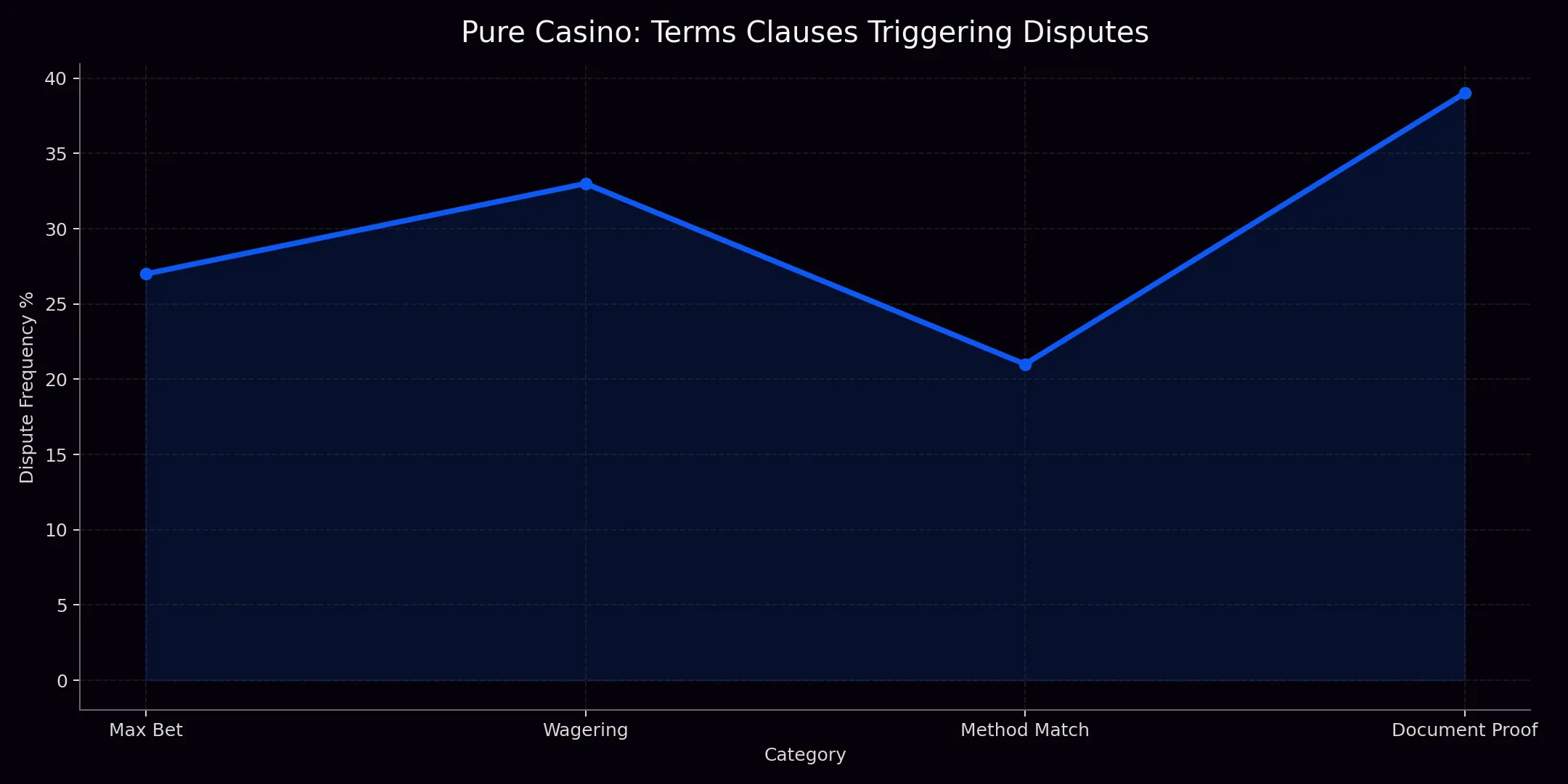
This chart ranks terms clauses by how frequently they trigger friction in real player workflows, including max-bet breaches, contribution mismatches, method switches, and document inconsistencies. The goal is to identify high-impact clauses early and convert them into checklist actions. If one clause sits at the top repeatedly, it deserves proactive monitoring in every session. Use this chart as a compliance priority map. It is easier to prevent disputes than to reverse them.